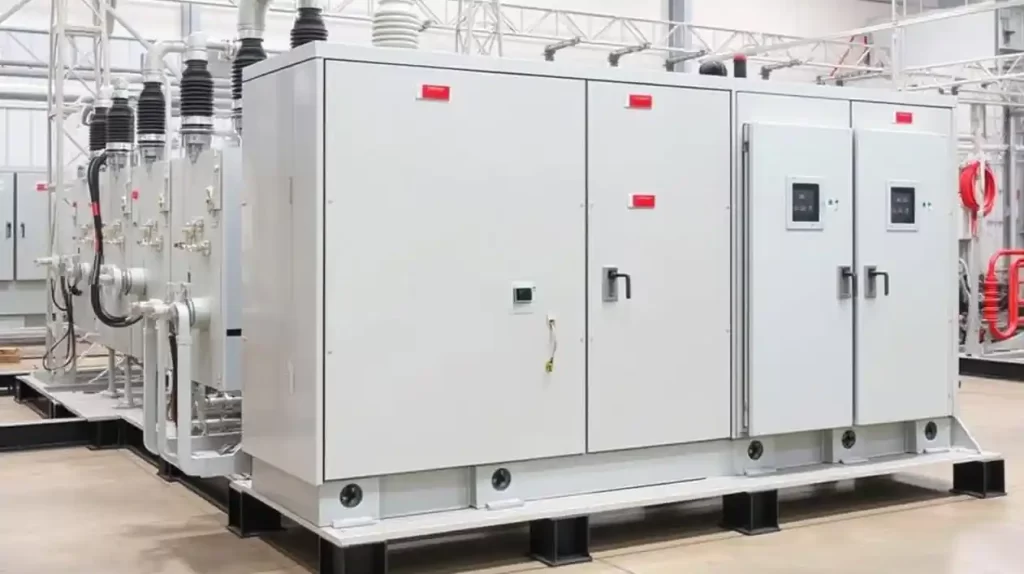
An MV (Medium Voltage) and LV (Low Voltage) panel system refers to the integrated electrical switchgear and distribution boards used to receive, control, and safely distribute electricity across a facility. These systems act as the central nervous system for power management, protecting equipment from overloads and safely stepping voltage down for everyday use.
Breaking Down the System
1. MV (Medium Voltage) Panels
- Voltage Range: Operates between
 and (sometimes up to depending on regional standards).
 - Function: Serves as the primary receiving point for utility power. They handle bulk power and route it safely to step-down transformers.
- Key Components: Circuit breakers, disconnectors, busbars, and protection relays.
- Applications: Large industrial plants, municipal grids, large commercial buildings, and renewable energy sites
2. LV (Low Voltage) Panels
- Voltage Range: Operates below (typically AC for standard systems).
- Function: Steps down the medium voltage via a transformer into a manageable format that can be used directly by homes, offices, and small machinery.
- Key Components: Main Distribution Boards (MDB), Sub Distribution Boards (SDB), Motor Control Centers (MCC), and circuit breakers.
- Applications: Residential buildings, data centers, commercial offices, and light industrial lighting/appliances
How They Work Together
In a standard commercial or industrial setup, power is received from the utility company at a medium voltage (e.g., ).
- The MV Panel acts as the primary gatekeeper, directing this high-power feed.
- The power then passes through a transformer to step it down to a low voltage (e.g., ).
- The LV Panel takes over to safely divide and distribute the power to your specific loads, like motors, HVAC systems, and lighting